How to Clean Your Baby’s Gums Before Teeth Come In

Healthy smiles start before the first tooth
Your baby may not have any teeth yet, but that doesn’t mean it’s too early to start caring for their smile. Good oral health begins before the first tooth appears, and gently cleaning your baby’s gums can help establish healthy habits from the very beginning.
For parents in Fayetteville, Lumberton, and beyond, here’s what to know about caring for your baby’s mouth before those first tiny teeth arrive.
Why Should You Clean Your Baby’s Gums?
Even before teeth erupt, breast milk, formula, and other residue can remain in your baby’s mouth. Gently wiping the gums helps keep the mouth clean while also getting your baby accustomed to having their mouth cared for.
Starting early makes the transition to toothbrushing feel more familiar once that first tooth appears. Instead of introducing an entirely new routine during teething, your baby will already be used to regular oral care.
How to Clean Your Baby’s Gums
Cleaning a baby’s gums is simple and doesn’t require a toothbrush or toothpaste.
Wash your hands thoroughly, then dampen a clean, soft washcloth or piece of gauze with water. Gently wipe your baby’s gums, including along the upper and lower gumlines. You can also gently wipe the inside of the cheeks and tongue when needed.
There’s no need to scrub. A gentle wipe is enough.
Try making gum cleaning part of your baby’s regular routine, particularly after the last feeding of the day. Building the habit now can make twice-daily brushing easier when teeth begin to appear.
Do Babies Need Toothpaste Before They Have Teeth?
Generally, toothpaste isn’t necessary while your baby is still toothless. A clean, damp cloth or gauze and water are sufficient for routine gum cleaning.
Once the first tooth comes in, however, it’s time to begin brushing. The American Academy of Pediatric Dentistry recommends brushing twice daily with a soft, age-appropriate toothbrush and a tiny smear - about the size of a grain of rice - of fluoride toothpaste.
When Do Babies Usually Get Their First Tooth?
Every baby develops on a different schedule. Many babies get their first tooth
at around 6 months of age, although some get teeth earlier and others considerably later.
The lower front teeth are often among the first to appear.
Signs that teething may be underway can include increased drooling, chewing on objects, and tender or swollen gums. A clean, chilled
teething ring or gentle gum massage may help soothe discomfort. Avoid teething products unless they are appropriate for your child’s age and recommended by your pediatrician or pediatric dentist.
Can Babies Get Cavities as Soon as Teeth Appear?
Yes. Once a tooth erupts, it can develop
tooth decay.
One important way parents can help protect those first teeth is by paying attention to feeding and bedtime habits. Avoid putting your baby to bed with a bottle containing milk, formula, juice, or another sugary beverage. When teeth are repeatedly exposed to these liquids for long periods, the risk of cavities can increase.
If your baby needs a bottle at bedtime, talk with your pediatric dentist about age-appropriate strategies for transitioning away from this habit.
It’s also a good idea to avoid sharing utensils or cleaning a pacifier with your own mouth. Cavity-causing bacteria can be transferred through saliva.
What About Fluoride?
Fluoride helps strengthen tooth enamel and prevent cavities once teeth begin to erupt. Because fluoride levels and water sources can vary, your child’s pediatric dentist can help you determine whether your baby is receiving an appropriate amount of fluoride.
This is especially worth discussing if your family relies on well water.
Never give an infant a fluoride supplement unless it has been recommended by an appropriate healthcare professional based on your child’s individual needs and fluoride exposure.
When Should Your Baby First See a Dentist?
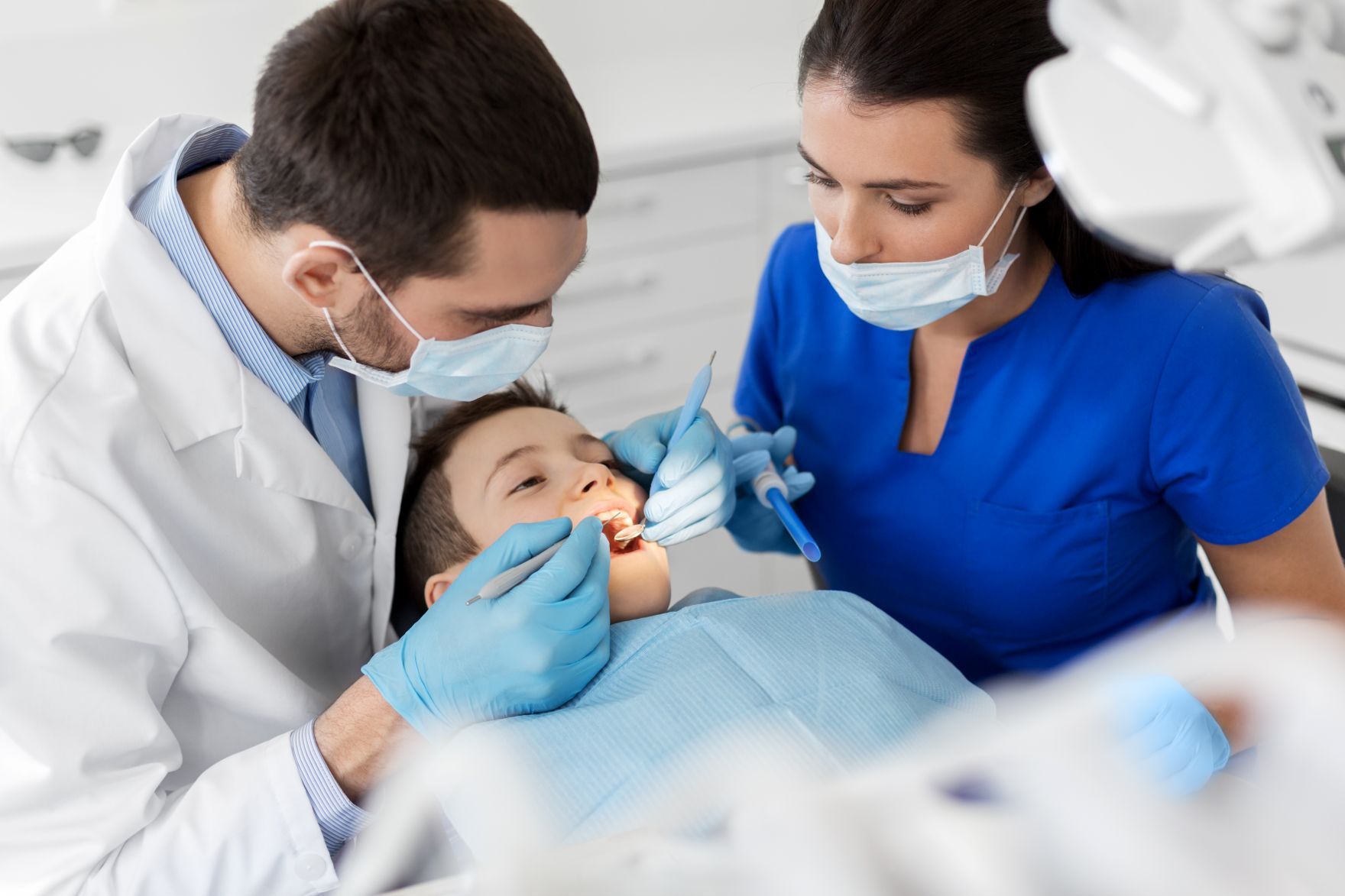
We recommend establishing a dental home
by your child’s first birthday or within six months after the first tooth erupts.
An early pediatric dental visit gives parents an opportunity to ask questions about brushing, fluoride, teething, feeding habits,
pacifiers,
thumb sucking, and cavity prevention. It also allows your pediatric dentist to monitor your child’s oral development from the beginning.
Starting Healthy Dental Habits From Day One
Taking care of your baby’s smile doesn’t have to wait for the first tooth. A few simple habits can create a strong foundation for lifelong oral health:
- Gently clean your baby’s gums regularly with a clean, damp washcloth or gauze.
- Begin brushing twice a day as soon as the first tooth appears.
- Use a tiny smear, about the size of a grain of rice, of fluoride toothpaste after teeth erupt.
- Avoid putting your baby to sleep with a bottle containing milk, formula, juice, or other sugary drinks.
- Avoid sharing saliva through utensils, pacifiers, or similar items.
- Talk with your pediatric dentist about fluoride, especially if your household uses well or bottled water.
- Schedule your child’s first dental visit by age 1 or within six months of the first tooth appearing.
At Village Kids Dentistry, we love helping North Carolina families give their children a healthy start. From questions about your baby’s first tooth to guidance on brushing, teething, fluoride, and feeding habits, our pediatric dental team is here to make early dental care simple and comfortable for the whole family.
Is your baby approaching their first birthday or getting their first tooth? Contact our
Fayetteville or
Lumberton offices to schedule their first pediatric dental visit today.